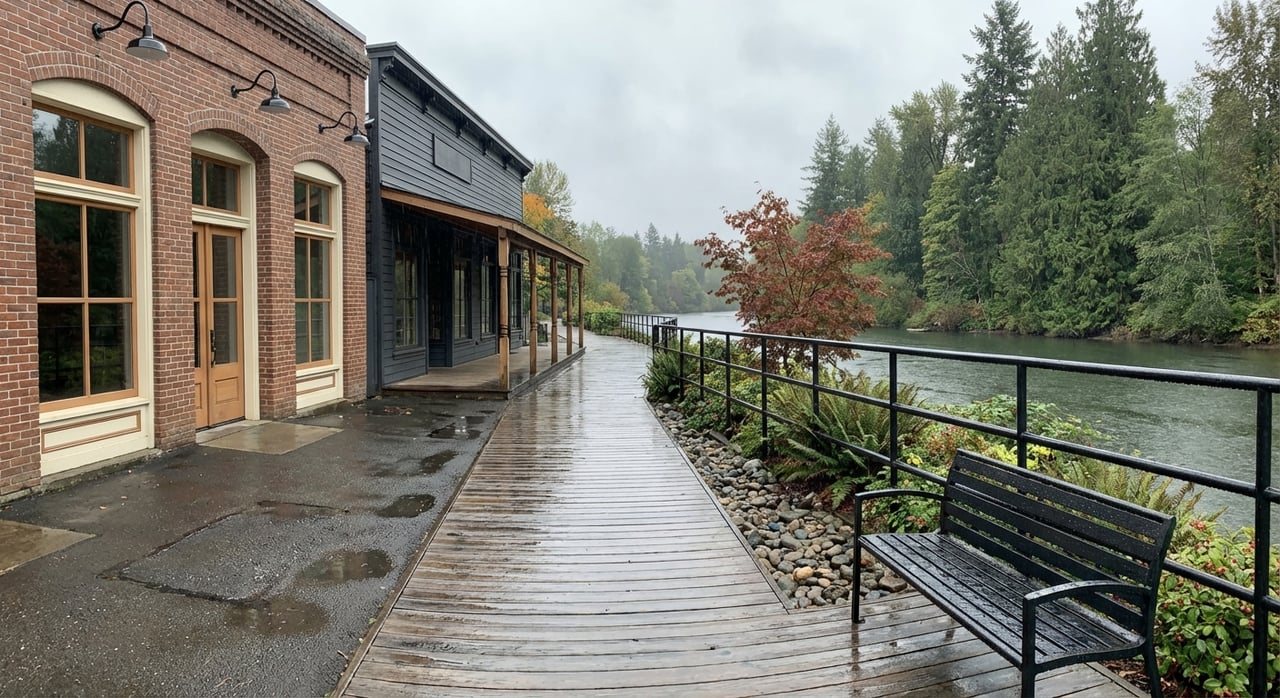
You want a small city that greets you with brick storefronts, a river breeze, and trails right from town. Historic Snohomish delivers that feel in a compact package, with a lively Old Town and easy access to outdoor space. In this guide, you’ll learn what it’s like to live near the riverfront, where to walk and ride, how neighborhoods differ, what homes cost, and how long common commutes take. Let’s dive in.
Why Snohomish stands out
Snohomish is a small city of about 10,500 people, so you get a close-knit feel without giving up daily conveniences. The city sits along the Snohomish River, and the historic core on First Street is the social and retail hub. According to the city, the Old Town area is a designated Historic District, which helps preserve its character and walkable scale.
- Population context: See the U.S. Census QuickFacts for Snohomish city for up-to-date estimates.
- Identity and place: The city highlights the Historic District’s role in shaping Old Town’s look and experience.
Old Town riverfront lifestyle
Walk First Street
First Street is where you take a slow stroll, browse antiques, and grab coffee while you admire vintage brick façades. The city’s Historic District standards keep the core’s turn-of-the-century character intact, with storefronts and some upper-floor housing that add to the street’s energy. If you enjoy running errands on foot, you’ll appreciate how compact this area feels.
Riverwalk and Cady Landing
Just off First Street, the short riverfront trail links Cady Landing and Kla Ha Ya Park back to the main street. The paved loop is made for easy walks, birdwatching, and quick river views. Cady Landing also provides a non-motorized launch and a scenic spot to watch the water. The riverwalk is an everyday perk if you live nearby and a pleasant pause if you’re out shopping.
Antiques, breweries, and events
Antique shops remain a major draw, and the brewing scene adds another layer with local taprooms around town. Annual events, including summer celebrations and seasonal markets, bring a steady community rhythm to Old Town. The net effect is a downtown that feels active across the year without losing its small-city pace.
Trails and parks you’ll use
Centennial Trail from town
The southern end of Centennial Trail starts in Snohomish and runs roughly 30 miles north through Lake Stevens and Arlington. It’s paved and popular for biking, running, and family walks. Living near Old Town gives you quick access to this regional spine, which is a big plus if you value car-light errands or long weekend rides.
Lord Hill Regional Park nearby
A few minutes east, Lord Hill Regional Park spans 1,400 acres with a web of trails for hikers and equestrians, plus planned mountain bike amenities. It’s one of the closest large natural areas for everyday hikes without committing to an all-day mountain drive. If you’re moving from the Eastside or Seattle, the scale and variety here will likely feel like a luxury.
Neighborhoods and home types
Old Town living
In Old Town and the blocks around First Street, you’ll find historic cottages on small lots, early 1900s details, and classic sidewalks. The city’s historic guidance helps maintain architectural character here, which is part of the appeal. Parking and garages can be limited in these older blocks, so plan to ask about on-street parking rules and alley access when you tour.
In-town neighborhoods
Beyond the historic core, you’ll see mid-century and newer single-family neighborhoods with more typical lot sizes and layouts. Many of these areas sit within a short drive of Old Town’s shops and the riverwalk. If you want a little more space while staying close to downtown, this is where you’ll likely look first.
Larger lots and semi-rural feel
Outside city limits, areas like Cathcart, Totem Falls, and Clearview offer larger lots, some acreage, and newer subdivisions. These homes trade Old Town walkability for more privacy and elbow room. If you work from home or want space for hobbies, the semi-rural edges can be a strong fit.
What homes cost in Snohomish right now
Price medians vary by data source, especially in a smaller market. Redfin’s January 2026 snapshot for ZIP 98290 shows a median in the low-to-mid $900,000s. Other public aggregators have reported medians in the mid-$700,000s for the same general area and timeframe. Both snapshots can be true at once because methods and boundaries differ.
What should you expect when you shop? Recent listing activity supports a broad range. Many single-family homes in or near town list from the high $600,000s up through the $1 million range, with larger modern homes and acreage properties above $1 million. Inventory in Old Town itself is limited, and well-located homes often draw quick attention.
Practical takeaway: set a budget that covers the mid-to-high six figures to low seven figures for in-city single-family options, and expect to move promptly on a standout home. Ask your agent to pull a fresh, day-of search so you have a real-time view of active, pending, and closed comps.
Getting around: commutes and access
Everett and Paine Field
Everett and the Paine Field area are the closest major job and travel hubs. Off-peak, many drivers see 15 to 30 minutes to reach Everett, depending on your exact start and end points. Paine Field also offers a small passenger terminal with leisure routes, which can be a convenient alternative to Sea-Tac for north-end travel.
Bellevue, Redmond, and the Eastside
Commuting to the Eastside is doable but typically longer and more variable than Everett. Some residents choose to drive; others pair Community Transit bus routes with regional rail or light-rail connections. Because traffic patterns change, check live routing apps and the Community Transit trip planner when you test your specific schedule.
Harvey Field trade-offs
Harvey Field, just south of town, is an active general-aviation airport. It’s used for flight training, skydiving, and private aircraft. For some, that activity is a perk. For others, it can add occasional noise. If you are sensitive to aviation traffic, include a few daytime visits in your home search to gauge sound levels.
Schools and practical services
Snohomish is served by the Snohomish School District. Boundaries and program details can change, so start with official school and district pages, such as the Central Emerson Elementary profile, to review current information and links to OSPI report cards. For healthcare, shopping, and daily errands, most residents rely on in-town providers and nearby regional centers in Everett and Mill Creek.
When comparing neighborhoods, use neutral measures you can verify, like school boundary maps, commute routes, and proximity to parks and trails. That approach keeps your decision grounded in facts that match your lifestyle.
Riverfront realities: floodplain notes
Old Town’s riverfront location adds charm but also requires smart due diligence. City and county sources note that floodplain conditions can affect river-adjacent lots and may cause periodic trail closures. If you are considering a home near the river, ask about elevation certificates, historical flood information, and insurance requirements. Your lender and insurance agent can help you understand costs and coverage.
A day in Historic Snohomish
Start with coffee on First Street, then take a short spin on the riverwalk to watch the morning mist lift off the water. Midday, jump on Centennial Trail for a bike ride north. In the afternoon, browse antiques or grab a pint at a local taproom. End the day with a sunset walk at the river and dinner steps from your car. That rhythm is what draws buyers who want a small-city lifestyle surrounded by easy outdoor access.
How to shop Snohomish like a local
- Define your core need: Old Town walkability, a standard in-town lot, or more space on the edge of town.
- Set a ready-to-act budget across the mid-to-high six figures to low seven figures for in-city single-family homes.
- Schedule tours early in the week. Well-located homes can move fast.
- In Old Town, ask about parking, alleys, historic guidelines, and recent permits for updates.
- Near the river, review flood elevation, prior insurance claims, and any lender requirements.
- If commute time matters, run your routes at the hours you expect to drive.
- Love trails? Spot-check the distance to Centennial Trail or Lord Hill Park to see how often you’ll use them.
Ready to explore Snohomish?
If Snohomish fits your vision, you deserve a strategy that’s both data-driven and personal. From live price comps to on-the-ground touring and negotiation, you’ll get clear guidance at each step. When you’re ready, connect with Wanis Nadir to plan your next move with confidence.
FAQs
What is the vibe of Historic Snohomish’s Old Town?
- Old Town centers on First Street, a designated Historic District with vintage storefronts, antique shops, cafés, and a short riverwalk along the Snohomish River.
Where can I walk or bike from town in Snohomish?
- The riverfront trail offers an easy paved loop, and the Centennial Trail begins in town and runs about 30 miles north for biking, running, and walking.
How long is the commute from Snohomish to Everett vs the Eastside?
- Many drivers see 15 to 30 minutes off-peak to Everett, while Eastside commutes are longer and variable; check live routing and Community Transit for current options.
What do homes in Snohomish typically cost?
- Expect a range from the high $600,000s to over $1 million, with medians that vary by source due to methods and boundaries in this smaller market.
Are there special considerations for riverfront properties in Snohomish?
- Yes. River-adjacent lots can sit in a floodplain. Review elevation data, insurance requirements, and any trail or access notes as part of due diligence.